
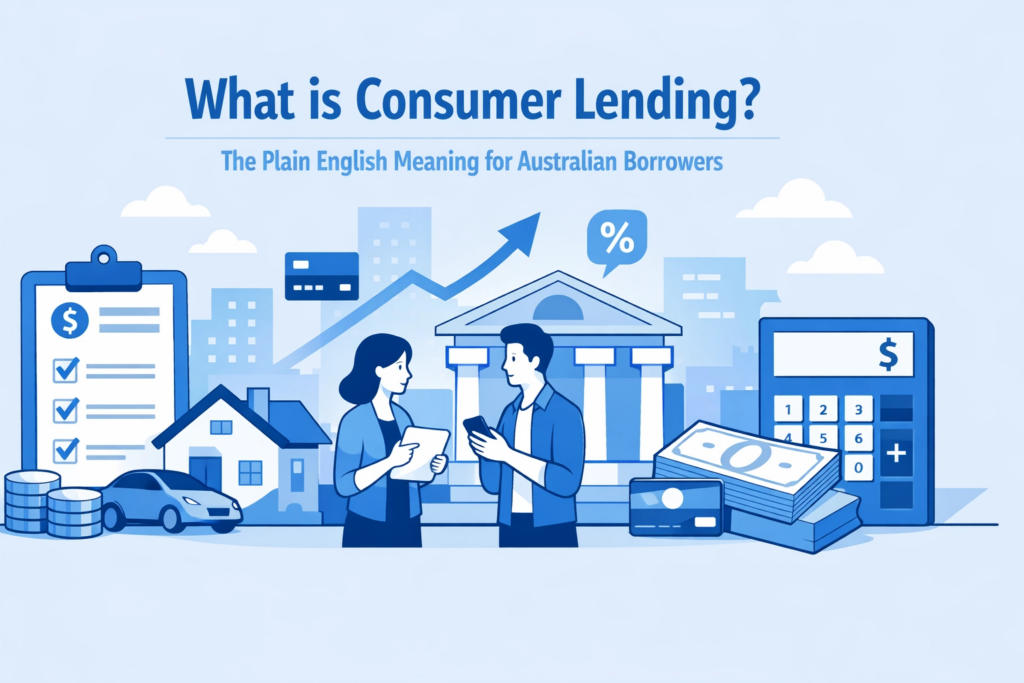
Let’s be honest: the world of finance is buried under a mountain of jargon that makes most people want to close their laptops and walk away. If you’ve ever sat across from a banker or scrolled through a finance website and felt like you needed a law degree just to understand a basic contract, you’re not alone.
At Capital Plus Finance, we believe in straight talk. No fluff, no confusing acronyms, and definitely no “bank-speak.” Today, we’re tackling one of those terms that sounds way more complicated than it actually is: consumer lending.
Simply put, if you’ve ever borrowed money for a holiday, a new car, or a couch, you’ve engaged in consumer lending. But there is a bit more to it than that, especially when it comes to Australian laws and how it differs from business borrowing.
Let’s break it down.
Consumer Lending Meaning: The 30-Second Definition
What is the actual consumer lending meaning?
In the simplest terms, consumer lending is money lent to an individual for “personal, domestic, or household purposes.”
It’s the bank or a finance company giving you a lump sum of cash (or a credit limit) so you can buy stuff that isn’t intended to make you money. It’s for your life, not your business.
Whether it’s a $2,000 credit card limit or a $600,000 mortgage for your family home, it all falls under the umbrella of consumer lending.

Business vs. Consumer Lending: What’s the Big Deal?
You might be wondering, “Why does it matter what we call it? Money is money, right?”
Actually, in Australia, the distinction between a consumer loan and a business loan is huge. It changes everything from the interest rate you pay to the legal protections you have if things go sideways.
1. The Purpose of the Loan
The main test is the “predominant purpose.” If more than 50% of the money is being used for personal reasons, it’s consumer lending. If it’s for a commercial enterprise, a side hustle, or to buy equipment for a tradie business, it’s business lending.
2. Legal Protections (The Safety Net)
This is the biggest factor. In Australia, consumer lending is heavily regulated by the National Consumer Credit Protection Act (NCCP). This law is designed to protect you from “predatory” lenders. It ensures that the lender has checked that you can actually afford the loan without ending up in “substantial hardship.”
Business lending, on the other hand, operates under a more commercial-focused framework. The law assumes that business owners are more financially savvy and don’t need the same level of hand-holding. This is why business loans can often be approved much faster, there’s less red tape, but they also carry different risks.
3. Reporting and Documentation
When you apply for consumer lending, the bank wants to see your life under a microscope. They want your grocery bills, your Netflix subscriptions, and your Uber Eats habits. For business lending (for the types of deals we handle), lenders usually care more about your credit score, time in business, and whether you own property. Profit and loss statements and cash flow reports are often not required.
Common Types of Consumer Lending
Most Australians have at least one type of consumer credit on the go. Here are the big ones you’ll run into:
Personal Loans
These are the “all-rounders.” You might grab a personal loan to consolidate some annoying high-interest debts, pay for a wedding, or fix up the kitchen. They can be secured (against an asset) or unsecured (just based on your promise to pay).
Car Finance
Buying a car for the weekend trips and the school run? That’s consumer lending. If you’re a tradie buying a ute specifically for work, that might move into machinery or equipment finance, but for most people, it’s a standard consumer car loan.
Mortgages (Home Loans)
The big daddy of consumer lending. Because your home is for you to live in, it’s a consumer product. The regulations here are incredibly strict because nobody wants to see an Australian family lose their roof over their head due to a bad loan.
Credit Cards and “Buy Now, Pay Later” (BNPL)
Yes, even that Afterpay or Zip purchase counts. While BNPL was a bit of a grey area for a while, it’s increasingly being pulled under the same umbrella of consumer lending rules to ensure people aren’t over-extending themselves.
The “Safety Net”: Why Australia is Different
If you’ve spent any time watching CPF TV, you know we’re all about transparency. One of the things we’re proud of in Australia is our “Responsible Lending” culture.
The NCCP Act means that any lender providing consumer lending must:
- Be Licensed: They need an Australian Credit Licence (ACL).
- Assess Suitability: They can’t just give you a loan because you asked for it. They have to prove that the loan isn’t “unsuitable” for you.
- Disclose Everything: No hidden fees in the fine print. They have to give you a “Credit Guide” and a “Key Facts Sheet” that lays out the interest rates and fees in plain English.
Straight talk: This is why getting a personal loan can sometimes feel like a bit of a grind. The lender is legally required to double-check your math. It might be a hassle, but it’s there to stop you from making a massive financial mistake.
How Lenders Decide to Say “Yes”
When you apply for consumer lending, the lender is basically looking at three things. If you understand these, you’ve won half the battle.
1. Capacity (Can you pay it back?)
This is your income vs. your expenses. Lenders will look at your pay slips and then apply a “buffer” to interest rates. Even if rates are currently 6%, they might test if you can still afford the loan if rates hit 9%. They want to know you won’t be eating 2-minute noodles for five years just to pay back the loan.
2. Character (Will you pay it back?)
This is your credit score. Have you paid your bills on time in the past? Do you have a history of defaults? In the world of consumer lending, your credit report is your reputation.
3. Collateral (What happens if you don’t pay?)
For secured loans (like a car or home loan), the asset is the collateral. If you don’t pay, the lender takes the car or the house. This makes the loan “safer” for the bank, which usually means a lower interest rate for you.

Secured vs. Unsecured: Which One is Which?
You’ll hear these terms a lot in the consumer lending world.
Secured Loans are tied to an asset.
- Pros: Lower interest rates, higher borrowing limits.
- Cons: If you can’t pay, you lose the asset.
Unsecured Loans are based on your signature and your credit score.
- Pros: No risk of losing your car or home directly if you miss a payment (though your credit score will take a massive hit).
- Cons: Higher interest rates because the lender is taking a bigger gamble on you.
Why Use a Broker for Consumer Lending?
You might think, “I’ll just go to my bank.” And sure, you could. But your bank only has their own products. It’s like going to a shoe store that only sells one brand in one size.
A finance broker acts as your “one-stop shop.” We look at your specific situation and then scan the market to find the lender that actually fits your needs. Whether you have a perfect credit score or a few “hiccups” from the past, we know which lenders are more likely to say yes and who is offering the best rates this week.
At Capital Plus Finance, we don’t do “intimidating.” We’re here to get the job done so you can get on with your life. Jason Smith and the team are all about finding the path of least resistance to get you the funds you need.
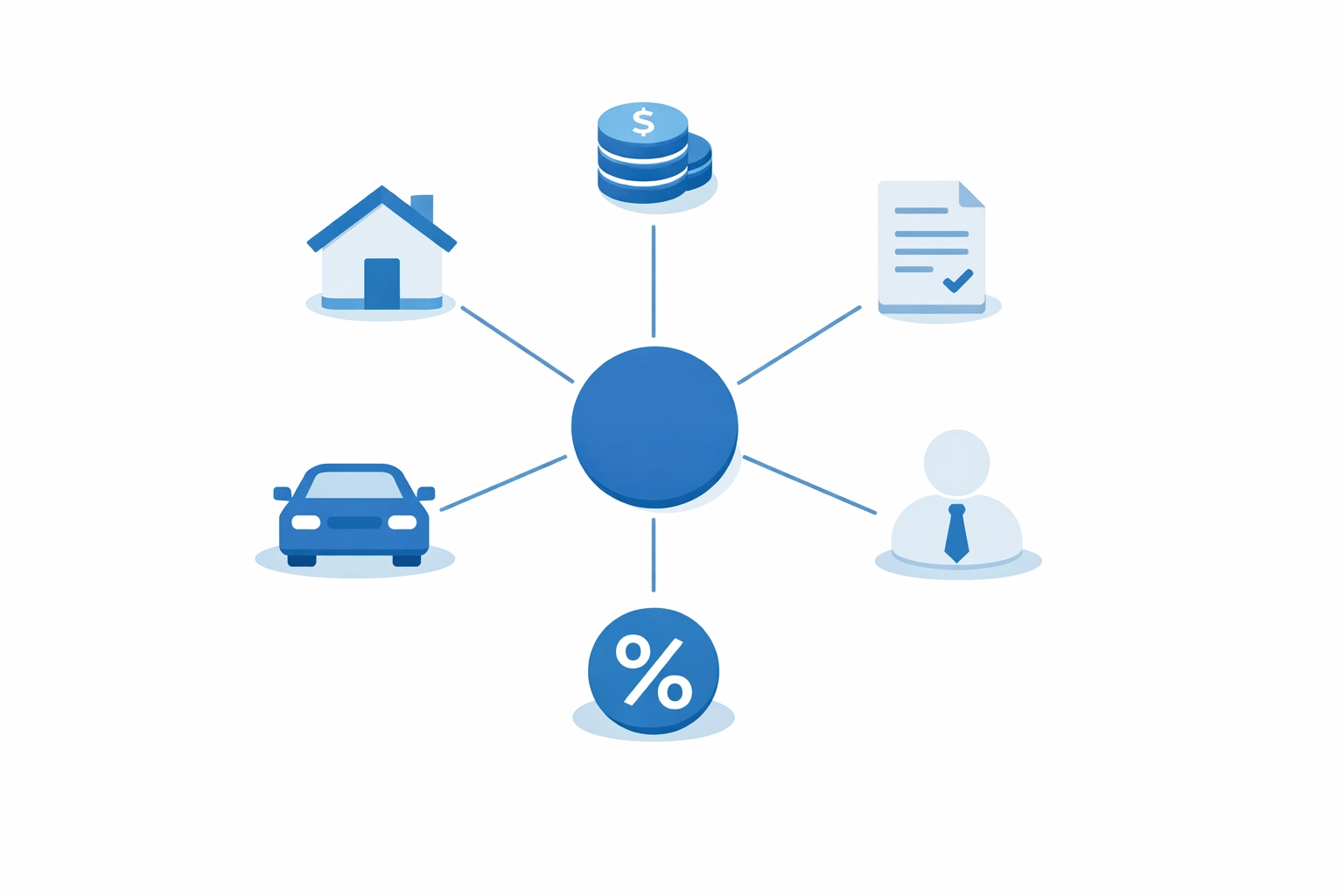
Summary: Consumer Lending Made Simple
Let’s wrap this up. Straight talk. Job done.
- Consumer lending is money borrowed for personal use (not business).
- It is heavily regulated in Australia to protect you.
- The “predominant purpose” of the money decides if it’s a consumer or business loan.
- Lenders care about your income, your credit score, and whether the loan is “suitable” for your life.
If you’re looking to scale your personal life: whether that’s a new car, a home renovation, or finally clearing those old debts: understanding the consumer lending meaning is the first step toward taking control of your finances.
Ready to see what your options are? Don’t spend hours wrestling with bank websites. Let us do the heavy lifting for you.
Get in touch with Capital Plus Finance today and let’s get your finance sorted without the headache.
Fast approvals, no-nonsense advice, and a team that actually picks up the phone.
Let’s get it done.


